
Definitions
Here, we define the words used. These definitions help readers understand the book better.
Lead:
A lead is an organization, company or person with whom you may be able to do business. Sales-team specialists must undertake suitable activities to turn the lead into a business opportunity, such as follow-up, telephone calls, text messages and arranging meetings.
Leads are the starting point of every sale and are very important. You should therefore devote sufficient time to them and use every method to find them.
Suspect customer
In English, “Suspect Customer”: a person for whom the goods or services have been created.
Prospective customer
In English, “Prospect Customer”: a suspect customer who has received the enterprise’s advertising or visited the place where its goods or services are offered.
Customer:
A “prospective customer” who has used an enterprise’s product or service at least once. Someone currently buying from another seller or who has merely requested a price from you is therefore not your customer, but a lead or business opportunity for you.
Opportunity:
When a business’s sales department concludes through negotiation that a lead may buy, or issues a pro forma invoice, that lead becomes a business opportunity. Opportunities are people or organizations with a high likelihood of buying and becoming customers. At this stage, customer relationship management, price, quality, fully meeting the customer’s requirements and various other product or service parameters can raise or lower the percentage of leads converted into opportunities.
Target market
The segment of the market to which sellers aim to sell their products or services. Naturally, the goods or services concerned have been created for this group.
Incoterms
A compound word formed from the three English words “International Commercial Terms,” meaning international business terms, and widely used. These terms allocate costs and responsibilities between seller and buyer.
Incoterms address issues connected with moving goods from seller to buyer. These include transport, customs clearance, imports and exports, who is responsible for payment, and who bears the risk of moving and transferring goods at different transport stages. Incoterms are usually used with geographic locations rather than transport-related labels. They were prepared and developed by the International Chamber of Commerce.
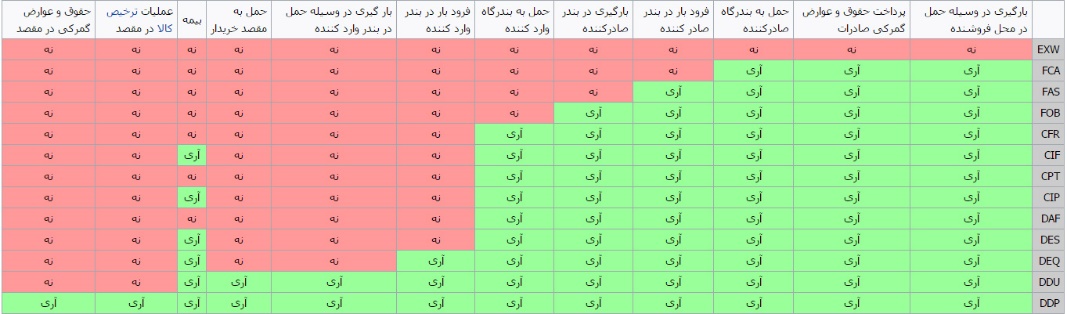
Translated transcription of the original table
This reproduces the labels and Yes/No cells in the historical figure supplied with the book. It includes older terms and is not an updated statement of Incoterms rules or contractual obligations.
EXW
- Import customs duties and charges
- No
- Import customs clearance
- No
- Insurance
- No
- Transport to the buyer’s destination
- No
- Loading onto a vehicle at the importing port
- No
- Unloading at the importing port
- No
- Transport to the importing port
- No
- Loading at the exporting port
- No
- Unloading at the exporting port
- No
- Transport to the exporting port
- No
- Export customs duties and charges
- No
- Loading onto a vehicle at the seller’s premises
- No
FCA
- Import customs duties and charges
- No
- Import customs clearance
- No
- Insurance
- No
- Transport to the buyer’s destination
- No
- Loading onto a vehicle at the importing port
- No
- Unloading at the importing port
- No
- Transport to the importing port
- No
- Loading at the exporting port
- No
- Unloading at the exporting port
- No
- Transport to the exporting port
- Yes
- Export customs duties and charges
- Yes
- Loading onto a vehicle at the seller’s premises
- Yes
FAS
- Import customs duties and charges
- No
- Import customs clearance
- No
- Insurance
- No
- Transport to the buyer’s destination
- No
- Loading onto a vehicle at the importing port
- No
- Unloading at the importing port
- No
- Transport to the importing port
- No
- Loading at the exporting port
- No
- Unloading at the exporting port
- Yes
- Transport to the exporting port
- Yes
- Export customs duties and charges
- Yes
- Loading onto a vehicle at the seller’s premises
- Yes
FOB
- Import customs duties and charges
- No
- Import customs clearance
- No
- Insurance
- No
- Transport to the buyer’s destination
- No
- Loading onto a vehicle at the importing port
- No
- Unloading at the importing port
- No
- Transport to the importing port
- No
- Loading at the exporting port
- Yes
- Unloading at the exporting port
- Yes
- Transport to the exporting port
- Yes
- Export customs duties and charges
- Yes
- Loading onto a vehicle at the seller’s premises
- Yes
CFR
- Import customs duties and charges
- No
- Import customs clearance
- No
- Insurance
- No
- Transport to the buyer’s destination
- No
- Loading onto a vehicle at the importing port
- No
- Unloading at the importing port
- No
- Transport to the importing port
- Yes
- Loading at the exporting port
- Yes
- Unloading at the exporting port
- Yes
- Transport to the exporting port
- Yes
- Export customs duties and charges
- Yes
- Loading onto a vehicle at the seller’s premises
- Yes
CIF
- Import customs duties and charges
- No
- Import customs clearance
- No
- Insurance
- Yes
- Transport to the buyer’s destination
- No
- Loading onto a vehicle at the importing port
- No
- Unloading at the importing port
- No
- Transport to the importing port
- Yes
- Loading at the exporting port
- Yes
- Unloading at the exporting port
- Yes
- Transport to the exporting port
- Yes
- Export customs duties and charges
- Yes
- Loading onto a vehicle at the seller’s premises
- Yes
CPT
- Import customs duties and charges
- No
- Import customs clearance
- No
- Insurance
- No
- Transport to the buyer’s destination
- No
- Loading onto a vehicle at the importing port
- No
- Unloading at the importing port
- No
- Transport to the importing port
- Yes
- Loading at the exporting port
- Yes
- Unloading at the exporting port
- Yes
- Transport to the exporting port
- Yes
- Export customs duties and charges
- Yes
- Loading onto a vehicle at the seller’s premises
- Yes
CIP
- Import customs duties and charges
- No
- Import customs clearance
- No
- Insurance
- Yes
- Transport to the buyer’s destination
- No
- Loading onto a vehicle at the importing port
- No
- Unloading at the importing port
- No
- Transport to the importing port
- Yes
- Loading at the exporting port
- Yes
- Unloading at the exporting port
- Yes
- Transport to the exporting port
- Yes
- Export customs duties and charges
- Yes
- Loading onto a vehicle at the seller’s premises
- Yes
DAF
- Import customs duties and charges
- No
- Import customs clearance
- No
- Insurance
- No
- Transport to the buyer’s destination
- No
- Loading onto a vehicle at the importing port
- No
- Unloading at the importing port
- No
- Transport to the importing port
- Yes
- Loading at the exporting port
- Yes
- Unloading at the exporting port
- Yes
- Transport to the exporting port
- Yes
- Export customs duties and charges
- Yes
- Loading onto a vehicle at the seller’s premises
- Yes
DES
- Import customs duties and charges
- No
- Import customs clearance
- No
- Insurance
- Yes
- Transport to the buyer’s destination
- No
- Loading onto a vehicle at the importing port
- No
- Unloading at the importing port
- No
- Transport to the importing port
- Yes
- Loading at the exporting port
- Yes
- Unloading at the exporting port
- Yes
- Transport to the exporting port
- Yes
- Export customs duties and charges
- Yes
- Loading onto a vehicle at the seller’s premises
- Yes
DEQ
- Import customs duties and charges
- No
- Import customs clearance
- No
- Insurance
- Yes
- Transport to the buyer’s destination
- No
- Loading onto a vehicle at the importing port
- No
- Unloading at the importing port
- Yes
- Transport to the importing port
- Yes
- Loading at the exporting port
- Yes
- Unloading at the exporting port
- Yes
- Transport to the exporting port
- Yes
- Export customs duties and charges
- Yes
- Loading onto a vehicle at the seller’s premises
- Yes
DDU
- Import customs duties and charges
- No
- Import customs clearance
- No
- Insurance
- Yes
- Transport to the buyer’s destination
- Yes
- Loading onto a vehicle at the importing port
- Yes
- Unloading at the importing port
- Yes
- Transport to the importing port
- Yes
- Loading at the exporting port
- Yes
- Unloading at the exporting port
- Yes
- Transport to the exporting port
- Yes
- Export customs duties and charges
- Yes
- Loading onto a vehicle at the seller’s premises
- Yes
DDP
- Import customs duties and charges
- Yes
- Import customs clearance
- Yes
- Insurance
- Yes
- Transport to the buyer’s destination
- Yes
- Loading onto a vehicle at the importing port
- Yes
- Unloading at the importing port
- Yes
- Transport to the importing port
- Yes
- Loading at the exporting port
- Yes
- Unloading at the exporting port
- Yes
- Transport to the exporting port
- Yes
- Export customs duties and charges
- Yes
- Loading onto a vehicle at the seller’s premises
- Yes
FOB
Abbreviation of Free On Board
Delivery of goods on board the ship at origin. The seller’s risk ends when the goods pass over the ship’s rail. Freight and insurance costs are borne by the buyer. The buyer arranges the transport contract from the delivery port, insurance and inspection. This method is used for goods carried by sea. If we want to quote a price at Bandar Abbas, we usually write it as follows.
FOB BND (Bandar Abbas)
CFR
Abbreviation of Cost and Freight
Cost and freight to destination. Formerly C&F, but specifically for sea transport. The seller’s responsibility ends when the goods pass over the ship’s rail during loading. Insurance costs are borne by the buyer; freight costs by the seller. The buyer arranges insurance and the seller arranges transport. This method is used for goods shipped by sea. If we want to quote a price including transport to the UAE, we usually write it as follows.
CFR Jebel Ali/UAE
CPT
Abbreviation of Carriage Paid To
Delivery with carriage paid to destination. Multimodal transport, but more often used for land or air transport. The seller’s risk and responsibility end upon handing the goods to the first carrier. The seller pays transport costs to the point specified in the contract; the buyer pays insurance costs and arranges the inspection contract. This method is used for goods transported overland. If we want to quote a price including transport to Istanbul, Turkey, we usually write it as follows.
CPT Istanbul/ Turkey
CIP
Abbreviation of Carriage and Insurance Paid To
Delivery with carriage and insurance paid to destination. This is a multimodal method. The seller’s risk and responsibility end when the goods reach the agreed point. Insurance and transport costs are borne by the seller, who arranges both contracts. The buyer arranges the inspection contract. This method is used for goods transported overland. If we want to quote a price including transport to Istanbul, Turkey, we usually write it as follows.
CIP Istanbul/ Turkey
CIF
Abbreviation of Cost, Insurance and Freight
Cost, insurance and freight to destination. Specifically for sea transport. The seller’s responsibility ends when the goods are loaded over the ship’s rail. The seller bears transport and insurance costs and arranges both contracts. This method is used for goods shipped by sea. If we want to quote a price including transport to Jebel Ali in the UAE, we usually write it as follows.
CIF Jebel Ali/ UAE
ExW
Abbreviation of Ex Works—delivery at the point of departure at origin:
Definition: Delivery at the point of departure at origin—the workplace. The seller delivers the goods to the buyer at the production site or warehouse, and all costs, including loading, transport, insurance and customs, and the risk of damage are borne by the buyer. Under this method, the producer or seller avoids all involvement in delivery. Foreign buyers do not like this method at all. To state that we deliver at a Tehran warehouse, we write as follows.
ExW Tehran/Iran
Stuffing (cargo stowage)
The process of arranging products or goods in shipping containers. It must be performed carefully and according to proper principles to prevent damage in transit. Often, wooden or plastic pallets make the container floor safe for the goods, while wooden boards, foam or similar materials protect them from the container body and walls. Incorrect stowage can destroy the entire shipment.