
Chapter One
Infrastructure
Introduction
Infrastructure consists of your initial requirements for getting started. Each item will motivate the customer in some way. We could name more, but have listed the most practical here so readers can take the best steps and come closer to international markets.
Some headings generate customers for you on their own and market for you around the clock. Others help build trust and attract the attention of prospective customers or leads.
I suggest putting all the infrastructure in place before you begin, so you can trade with greater focus on your goals as you proceed.
You can use this infrastructure whether you are a factory, manufacturer, trader or merchant. Even if you want to work as an international marketer, you can use it to sell products from several factories or manufacturers. You therefore do not need to be wealthy or spend a very large sum on this infrastructure.
The infrastructure is as follows:
Website
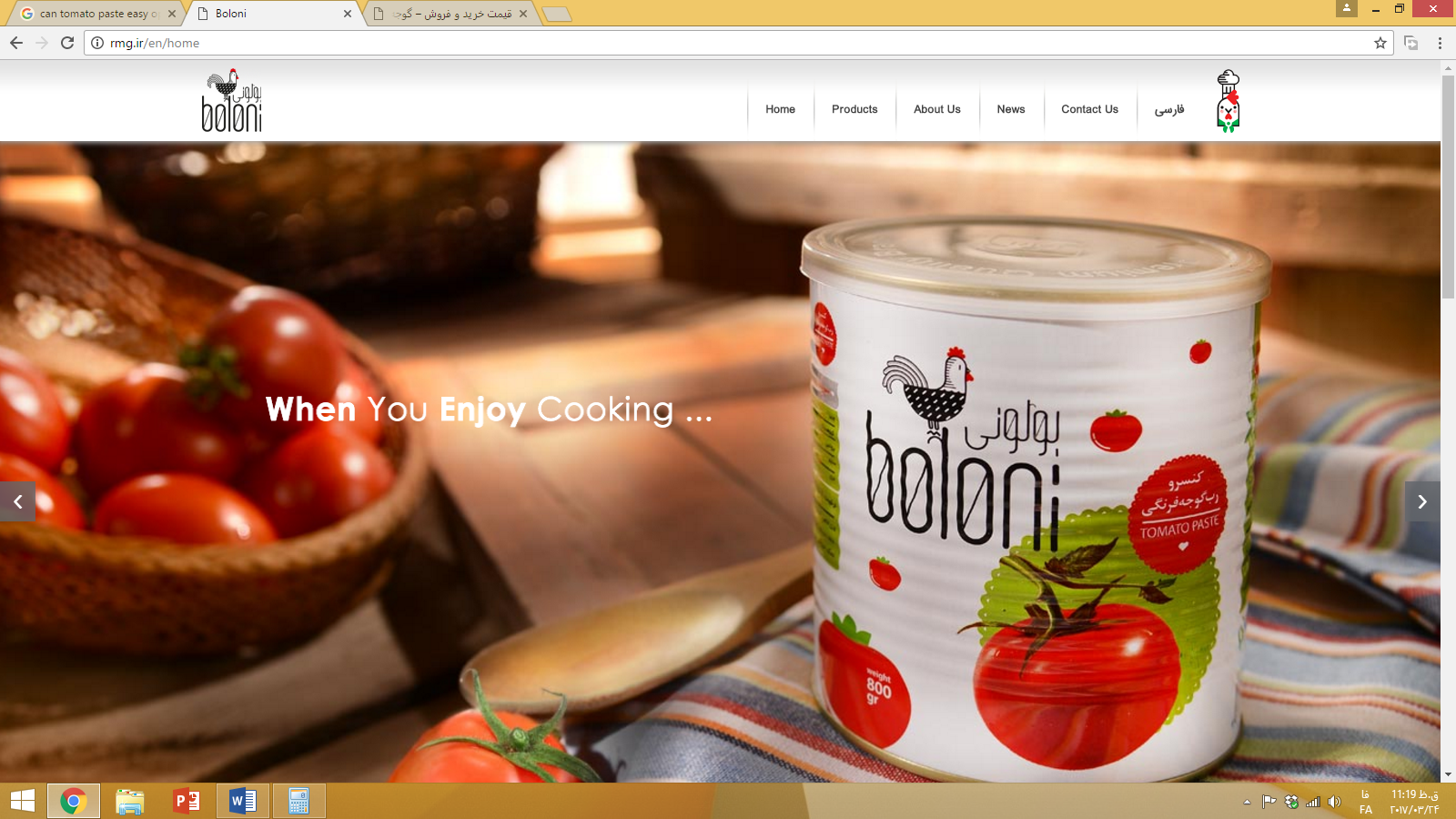
Websites are created to explain and present the details of your factory or organization, so always keep the purpose of creating a website in mind.
Try to put everything your buyers need on your website. Leaving aside the site’s appearance, which depends on your taste and preferences, I suggest including links and explanations for the following items.
- Home page
- About us
- Contact us
- Products and services
- Capacity and facilities
- Terms of sale and provision of services or goods
- Images of services, goods, the factory or production facility
- Providing bills of lading and reports of recent sales or shipments
- Questions that buyers may have.
Beyond the points mentioned, try to introduce yourself and your organization fully through your website.
There are many more topics concerning website design and proper structure. I hope to discuss them further in later editions. However, since technology is advancing rapidly, it is better to use professional advisers in this field so you always maintain the highest quality.
Another suggestion for a good website is to study competitors’ sites, which can give you new and better ideas. Needless to say, you should examine all kinds of sites, both Persian and English.
A consistent presence
You must be seen everywhere—by which I mean everywhere on the internet. Today, Google’s search engine is very prominent and has no rival in this area. Your buyers use it to find sellers or service providers they need. You therefore need to be on the first page for every keyword related to your field or services.
Yes, this concerns SEO: besides your ordinary website, you need a dedicated SEO website that attracts searchers. Building it means preparing at least 5,000 to 10,000 pages of content according to SEO principles, so you can appear on Google’s first page for all keywords related to your work.
Google pay-per-click advertising can make this quite easy, although its high cost may deter you and its effect is not permanent. Our point here is that you need to be visible in search engines, on the first page and among the first results, whether through paid Google advertising or by producing a large volume of high-quality content on your own site.
The principles of creating this content are complex, and you should certainly use professional advisers in the field. I have seen very few people with sufficient expertise: most can produce small quantities of high-quality content. Producing a large volume of high-quality content is a distinct specialty. Still, produce as much of your desired content as you can.
One method that may be effective only at the beginning is the following:
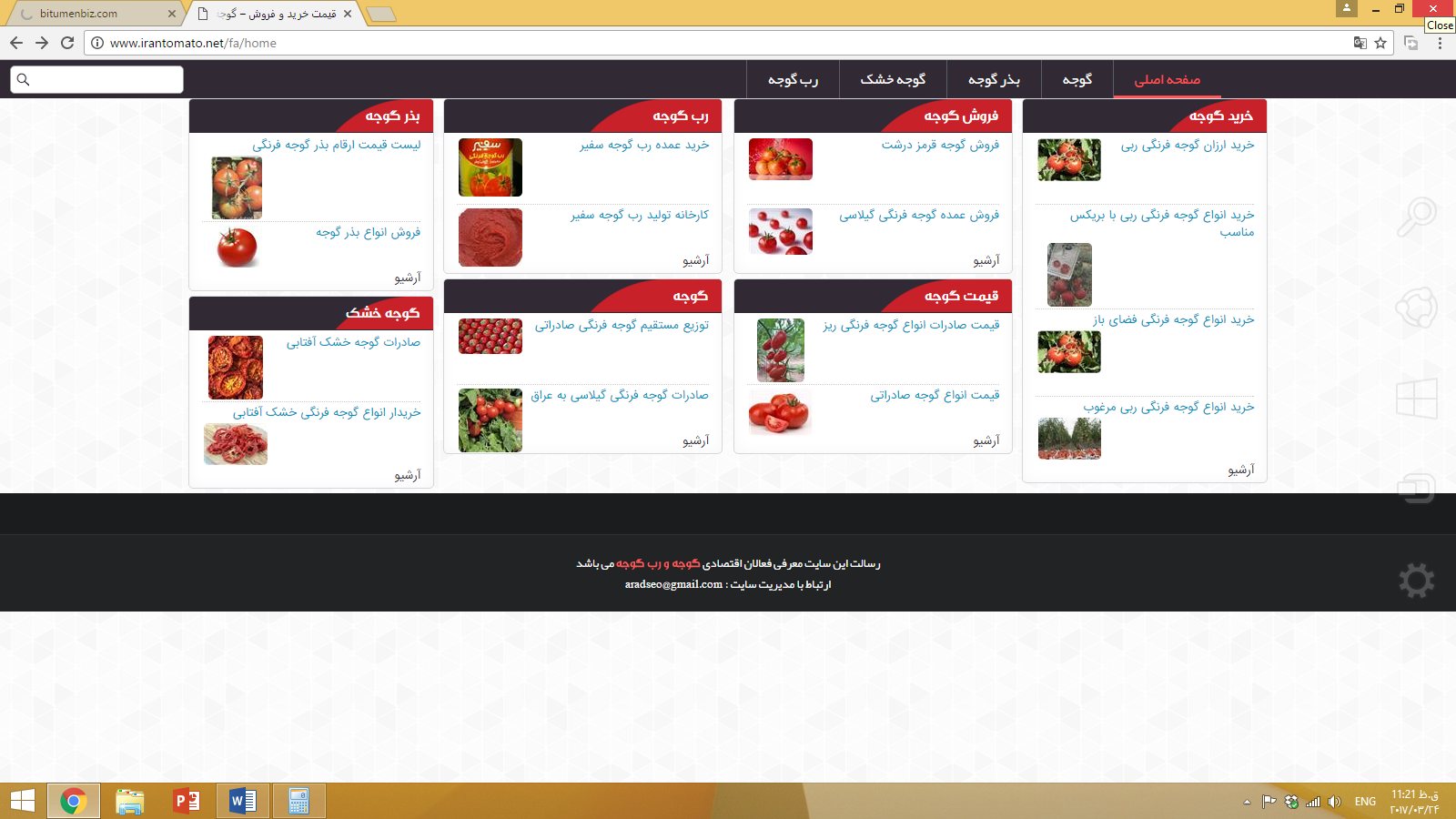
As I will explain, there are approximately 120 well-known ports around the world, most served by shipping lines. If your product has several grades or packaging types, you can generally use this method. Let us clarify it with an example: suppose you operate a tomato-paste factory and do not manufacture any other canned products.
Tomato paste comes in the following packaging types:
| Standard 400-gram can | Can400gr |
| 400-gram easy-open can | Can400gr WITH EASY OPEN |
| 400-gram easy-open can with an additional lid | Can400gr WITH EASY OPEN CAPS |
| 800-gram can | Can 800 gr |
| 800-gram easy-open can | Can 800 gr WITH EASY OPEN |
| 800-gram easy-open can with an additional lid | Can 800 gr WITH EASY OPEN CAPS |
| Aseptic | Aseptic |
| 4-kilogram can | Can 4Kg |
| 17-kilogram can | Can 17Kg |
Here, we have nine packaging types.
In terms of quality, your factory might produce two grades, for example 25 Brix and 28 Brix.
For payment, you can work with your customer using two settlement methods: cash and LC.
You should therefore produce content under the following headings.
Packaging quality + product quality + destination country + settlement method
In numerical terms, you can produce the following quantity of content.
9 × 2 × 120 × 2 = 4,320 headings
In the body text, write about your product and explain that you can deliver it to the customer at the specified port or country on those terms. The words mentioned above vary across your texts, so most will not be identical.
So far, this method has produced positive results. Given the rapid advance of technology, I hope it will still be useful to you when you read this.
Types of presence:
An internet presence
Recently, this has become known as content marketing. You produce high-quality content relevant to your business to remain at the top of search-engine recommendations. Reading the material on your website also attracts the buyer’s interest in examining your organization and purchasing. This method has been very successful, particularly because producing the content is hard work: most people do not use such methods and prefer conventional ones such as Google AdWords, or Google pay-per-click advertising.
However, its lasting, long-term presence and strong positive impact on the buyer have always been among the greatest strengths of this form of presence.
Email marketing
Under this heading, I did not intend to discuss advertising methods. I am mainly trying to explain how to appear more often in front of your buyers. But because email advertising is very effective in international trade, I have included this topic.
In any case, the aim is not untargeted advertising to an email list found on the internet. You must find your own specific email list and contact those people; otherwise, this method only creates extra costs.
Where can you find a list of buyers’ valid email addresses? Usually, exhibition catalogs are the best method. There are also market-research companies that will prepare the email list you need for a fee.
Besides needing this list, you also need special servers capable of sending this volume of email to prospective buyers without it being marked as spam. The server is therefore a communication tool. Over time, whether you buy email addresses or gradually obtain them through research, you will always need this communication tool.
Social networks
Different industries have their own social networks. Most traders, for example, use LinkedIn, which can also provide a list relevant to your industry for a fee. Pages on sites such as Facebook can likewise provide useful information about prospective buyers, or leads. Whether free or paid, your social-media presence allows buyers to follow you there and keeps you visible to them.
Attending exhibitions and seminars
This type of presence is very costly but produces a faster effect than other methods. If you can afford it, always attend important annual events so you can find new buyers.
Physical presence and meetings
Travel and connect with people in that region who work in your field. Trips aimed at meeting traders in your industry are very effective. I know many traders who have succeeded this way—one of the oldest forms of presence, perhaps a traditional method thousands of years old.
Importantly, those who benefit most are the ones who have made initial contact before traveling and have already applied the trust cycle to the existing customer or lead.
Other advertising methods in the target market
There are many other methods, but there is no need to discuss them further: for example, local newspaper advertisements, text messages to buyers’ mobiles, billboards abroad or television advertising in the target country. You need to determine which methods you require.
Profile
(Company profile)
A profile, or company profile, introduces the organization. It is essentially an offline website. Whether you have it as a file or in print, its purpose is to introduce you to the customer.
In your profile, introduce your company and organization as follows:
- Organization name and logo
- Introduction
- CEO’s message
- Company vision and goals
- An introduction to the establishment history
- Capacity and facilities
- Plaques, awards, certificates and licenses
- Products and services
- Address and contact numbers
In your profile, aim to describe everything your leads need to know. Make good use of photographs and images. Introduce your organization’s managers and responsible staff, and include their photographs.
Catalog
Your catalogs should differ from those most organizations print, because you are seeking to negotiate with professionals who understand technical terms and want to know what lies beneath the surface of the product you offer.
Ordinary customers judge your product more by its appearance, or may even be attracted by persuasive words. But when you intend to trade with professionals, try to explain every detail fully.
If your product is a particular canned food or fruit compote, state every detail: shelf life, ingredients, sugar percentage, syrup quantity and quality, the number of cherries, for example, and even their size. Include photographs of the cans, print and packaging quality, the languages in which product information is printed, lid quality, can-sheet quality and thickness, net weight, gross weight, number per pack, pack packaging quality, drained weight per can, licenses and certificates, and anything else a professional buyer might ask about.
You therefore need your own export catalogs so your leads can examine your goods or services from a technical perspective.
Price list
An Incoterms-based price list means offering leads your product’s FOB, CFR or CPT price. One reason foreign buyers cannot decide whether to buy from you is that they do not know the final cost of your goods up to their own borders. The buyer cannot come to Iran to calculate transport to Bandar Abbas, loading and stuffing costs, then work out the landed cost and whether it can compete in the market with other companies’ products.
Prepare clear price lists for your products in dollars and according to Incoterms.
Some believe there should be no fixed price list, only a price range, because every customer buys different quantities on different terms. Whether you state a range, such as $1 to $2, or a specific figure, such as $1.20, is up to you. Having a price list is very effective in motivating purchases.
Several points must appear in the price-list design.
A: Issue date:
When you issue a price today, the buyer needs to know whether the list has just been updated or the list they have is old, in which case they must request a new one.
B: Validity date:
Give the list a validity date. Since your prices depend on the dollar exchange rate, circumstances may require updates every day or every month to keep them aligned with the market. A validity date also makes your responsibility for quoting prices easier to manage.
C: Contact information:
This list should not be merely a set of text with no contact information or telephone number. Prepare it on your letterhead with your logo, and make sure to include quick or immediate contact details at the top or bottom for the buyer.
D: Photograph:
If your product allows you to place small photographs beside each unit price, definitely do so. This makes it easier to identify which product each price refers to.
E: Explanatory notes:
Price lists usually include notes such as the minimum order, that prices are based on a specified dollar rate and become invalid after major currency changes, or that changing packaging is possible with a stated price increase or reduction. Do not omit anything else you think should appear in the explanatory notes.
Communication tools
Communication tools have greatly increased the speed of international trade today. If you intend to export, you cannot easily communicate with people who want to contact you without Skype, WhatsApp and similar tools.
Mobile and fixed telephone networks exist worldwide, but connectivity problems, communication costs and, most importantly, the quality of internet-based communication have made people much more inclined to use these services than telephones.
You can speak with anyone through Skype by voice and video at minimal cost. This quality of communication effectively builds rapport, attracts your leads’ attention and creates new sales opportunities.
The minimum tools needed to begin are as follows:
- A landline connected directly to an operator fluent in English
- Fax
- Mobile phone line
- Skype
- imo
There are other services too. Yahoo was once one of the most famous tools but is now almost forgotten. In any case, you must identify the best and most widely used tools in your target market and make yourself accessible through them.
For example, if you plan to work with Chinese counterparts, make sure you have WeChat, because it is much more common in China than other communication services.
Database (lead list)
Foreign operators in your field, brokers, intermediaries, overseas distributors, foreign factories that use your goods, overseas trading companies active in your field, and any other person or company working in your field abroad should all go on a list. In other words, you need information to start. Usually, you obtain it through directories, internet searches, exhibition catalogs or any other method available for gathering information.
Sometimes this information can be purchased from international market-research companies. The need for it is very important: lacking it is like being blind and unable to see anyone. The more extensive and higher-quality your information, the easier it is to work toward developing your exports.
Thanks to the internet’s very large networks, this information can be obtained cheaply, but you need to start collecting it.
50 essential sentences
If your English or spoken communication is not very good, do this. We should not expect every manufacturer or seller, or even everyone wishing to export, to know English.
It is enough to write down fewer than 50 sentences you might ask your leads, or they might ask you, get someone with some language experience to write their English equivalents, and memorize them.
In reality, your conversations with anyone in your field consist of no more than 50 repeated sentences. They usually ask about prices, shipping, packaging, product quality and similar matters. If you pay attention, you will see that the total may not even reach 50 sentences. Prepare this list so you no longer need a translator.
Video
Put yourself in the shoes of a foreign buyer. How much would it help build your trust and interest to see a video of a business, factory or production facility, showing the owners and the people you talk to explaining their organization and its activities?
I share this view: you need a video channel. Regularly make varied videos of your activities, meetings, shipments or production, and put them on the channel. This helps buyers connect with you and better appreciate your real presence.
One thing that worries buyers is the existence of fake people who pretend to possess something or have capability in a field, undermining buyers’ trust in online or remote sellers. So use your creativity in videos and photographs and present them to your buyers.
The points I think should be observed when making videos are as follows:
Make sure the people who answer inquiries appear in the video, with both their faces and voices shown in the workplace—for example, in the factory—explaining working conditions, production methods or capacity in English.
Interview the CEO and sales manager. Discuss the organization’s goals, capacity and vision.
Regularly film dispatch and loading onto trailers or trucks, whether domestic or international. If you have export orders, film the port-loading stages too. Buyers care greatly that you are active and your organization is not shut down.
If you have allocated a budget for this, have a professional videographer and team produce the videos for you. Otherwise, a mobile phone can do the job too.
Plan to post a video once a week or once every two weeks. Do not post irregularly; try to make the process consistent, varied and different. Your product may not change much, but you should always find something to say.
If you have an important meeting, receive a plaque or certificate at a seminar, or an inspector from an organization—even a health inspector—visits your factory, turn it into a visual story and post it on your channel.
Calculate the prices.
Contact transport companies and calculate maritime shipping and total costs for most of the world’s well-known ports. I have investigated and found nearly 120 very well-known ports to which goods can be shipped. Shipping-line freight rates usually do not change very much, but you need to quote customers a total CFR price.
The buyer needs to know the total cost of the requested goods at their country’s customs border; otherwise, it is difficult to assess whether the terms suit them.
Iran also has particular overland routes. For example, we are a transit route for Turkmenistan and other neighboring countries, which must carry most of their imported goods through Iran. We therefore need overland freight rates to neighboring countries. Iran’s neighbors have excellent potential for purchasing Iranian goods, and these opportunities can be used.
But how do we calculate a product’s FOB price?
Steps in the book’s historical example—not current prices or instructions
- Take the price of one container of your product.
- Add the transport price to Bandar Abbas.
- Add port-handling costs. You can request this amount from customs clearance agents in Bandar Abbas.
- Add the cost of loading on board the ship, or THC.
- Add together all amounts from steps 1 to 4, then divide by the quantity of goods in one container.
- Divide the resulting amount by the current dollar exchange rate—the rate at which the bank or exchange dealer buys dollars.
The resulting figure is the FOB price per unit of your product.
For example, I want to calculate the FOB cost per can for one container of tomato paste.
A container of tomato paste in 800-gram cans holds 2,200 packs, each containing twelve 800-gram cans. Assuming a price of 2,000 tomans per can, the total is 52,800,000 tomans.
The truck freight charge from Mashhad to Bandar Abbas for this quantity is 1,500,000 tomans.
Stuffing and port-handling costs—including arranging cargo in containers, weighbridge receipts, warehouse receipts, moving empty containers to the loading area, customs follow-up and paperwork, and other small tasks—currently amount to 300,000 tomans.
THC per twenty-foot container: 460,000 tomans
52.800.000+1.500.000+300.000 + 460.000 =55.060.000
Each container holds 2,200 packs, so 55,060,000 divided by 2,200 packs equals 25,027 tomans. That makes the FOB cost 2,085 tomans per can.
Suppose today’s dollar rate is 3,700 tomans to buy and 3,730 to sell. Use the buying rate, which is the lower one. Our dollar price is therefore 56.36 cents per can and 6 dollars and 76.41 cents per pack.
The prices above are your total FOB costs: the goods are ready for maritime transport, and only the freight charge needs to be paid for shipment.
Foreign-currency account:
To trade with the world in a real sense, you need a foreign-currency account. Without one, you will always depend on others—exchange dealers—and be unable to offer customers many currency-related services, such as accepting an LC. So make sure you open a foreign-currency account of your own.
Having a company is a prerequisite for a foreign-currency account. The problem is that companies based in Iran have not, at least so far, been able to obtain much service from Iranian banks for receiving foreign-currency payments. Moreover, the quality of Iranian banks’ services is not at all satisfactory for the future.
In any case, I recommend having a company outside Iran. I also recommend registering it in a free zone in a neighboring country or elsewhere outside Iran, so you do not again become burdened with taxes and high maintenance costs.
Because these conditions are changing rapidly, I do not recommend any particular country. At present, however, all foreign banks provide online payment and money-transfer services. After registering a company and opening an account, you therefore need to travel no more than once a year; you can handle balances and transfers online from Iran.
I suggest opening an account with a first-tier bank if you can. If not, start with a mid-tier bank and, after establishing a good account turnover, apply to a first-tier bank.
Try to maintain a good payment record. After a while, foreign banks may extend you credit, allowing you to obtain loans or facilities for yourself or your customer.
Take the utmost care with banking. Try to keep your system completely secure and virus-free so it is not hacked or infected, because you could lose all your money. Be very careful!
Pro Forma Invoice (PI)
Having an official pro forma invoice is very important. Once you reach a preliminary agreement with your buyer, they will ask for one, and you must include the necessary qualitative and quantitative details. I have included an image of a sample pro forma invoice for you.
Notice that, like a price list, a pro forma invoice has an issue date and a validity date. Anyone acting after that period must request a new quotation. These invoices must also include the payment account number, the exact dollar amount, the calculation basis and the explanations I mentioned. State which trade term the price is based on, the loading location, loading time frames and a brief description of the goods.
Often, you reach agreement with a buyer through this pro forma invoice alone; they do not ask for a contract and consider it sufficient.
Formal offer: Full Corporate Offer (FCO)
Before a pro forma invoice is issued, the buyer asks you for a quotation. They want to understand how they can work with you and need fuller details.
If you want to give a formal response that answers most of their concerns and questions, it is better to use an FCO. Its shorter or condensed form is called a Soft Corporate Offer, although I do not think that is particularly necessary. It is better to get straight to the point: instead of creating a mountain of administrative procedures and correspondence, let the buyer know how to get started with you.
It is mistakenly thought that issuing this kind of formal offer makes sense only for petroleum products and is not customary for other goods. In reality, it is a negotiation procedure unrelated to the product. Try to use this type of correspondence to appear more professional to your customers.
I will set out the headings of a sample FCO document here so you can become more familiar with it.
Begin with a few sentences stating that you are ready to sell and deliver the product or service. Then include at least the following clauses.
COMMODITY: Goods
Describe your goods fully. If there is a specific name or detail in the name, include it completely. This identifies exactly which of your products you are describing.
ORIGIN: Origin
Origin means the place where the goods were produced. If the goods were made in Iran, you must state Iran as the origin.
PACKING: Packaging
Goods necessarily have some form of packaging for transport. Your goods may be in a carton, can or some other kind of package, and its specifications certainly matter to your buyer. Try to describe your packaging completely and clearly, and state its specifications.
QUALITY: Quality
Your product has a particular analysis, grade or other characteristics that clearly describe its quality to the buyer. If needed, include a laboratory or inspection-company sheet showing a sample analysis so the buyer can better understand the goods’ quality.
QUANTITY: Cargo volume or order quantity
State the quantity for which you are quoting: a container, 10 tonnes or 100 tonnes, for example, and the loading tolerance for that shipment.
MONTHLY DELIVERY: Quantity delivered each month
How much can you supply each month? Your contract may run for a year. What, ultimately, is your monthly transport capability or available capacity?
CONTRACT PERIOD: Contract term
If a contract is signed, how many months does it cover, or for how many periods can it be renewed? For example, your product may be seasonal and unavailable after three renewal periods.
TERMS OF DELIVERY: Delivery method
Here, specify the delivery type. These terms follow Incoterms: for example, delivery at the factory gate, EXW; delivery on board the ship, FOB; or any other delivery type.
PRICE: Price
State the price here using specified units or those customary in trading your product: meters, kilograms, liters, feet, inches or anything else. What matters is that the price is clearly stated.
PAYMENT: Payment method
Payment methods are very important. Most buyers encounter problems because they cannot agree on a payment method with the seller.
When you want to buy goods from someone, various concerns arise: the manufacturer may fail to deliver on time, especially if people from a country acquire a reputation for not keeping promises. Transferring money between countries has also continually posed problems during this period. Here, therefore, we focus more on payment methods.
Cash payment or TT (Telegraphy Transfer)
This is the most common purchasing method, and it involves considerable risk for the buyer. The buyer must pay some or even all of the pro forma invoice amount into your account in cash, without any guarantee of timely delivery or security for their money. After paying, it is difficult to demand the money back because there is no guarantor between you. Nevertheless, it is common, especially for international purchases.
The only thing that can persuade the buyer to make this payment is the trust you establish. If you work effectively toward this and gain the buyer’s attention and trust, they will accept this method and begin working with you.
Usually, however, cash payments under this method are split into stages: for example, 10 percent in cash at the start of the contract, 30 percent when the goods are ready at the factory gate, and the remaining 60 percent after loading on board the ship.
These percentages and the number of payment stages depend on your judgment, the risks and the profit from production. Design the arrangement your buyers need yourself.
Payment by documentary credit: LC (Letter of Credit)
This is the most reliable payment method for buyers. The buyer does not act as the intermediary themselves; instead, through their bank in their own country, they inform the bank where you hold an account that payment of the contract amount is guaranteed if you ship the specified quantity by the specified date.
If you do not fulfill your contractual obligations—whether by failing to deliver the goods on time or failing to perform a clause properly—you will not be paid, and after the specified period the customer’s credit will be returned to their account.
This has a major advantage: a bank guarantees the entire contract amount. If your goods suffer a sharp price drop or the buyer encounters a problem, the buyer’s bank must pay what you are owed.
There is also a risk: if you fail to fulfill your obligations in any way—for example, shipping even one day after the specified deadline—no money will be transferred to you. The documents and goods remain under your control, but you will nevertheless suffer a loss.
Export guarantees or commercial-risk coverage
Payment methods vary greatly. I have only described these two because they are very common.
What matters is finding a way to cover the commercial risks of selling your goods. Even in the best case, you may be receiving a guarantee from a bank, but banks around the world can go bankrupt overnight, putting you and all your goods in difficulty. Most buyers open credit for you through second-, third- or even fourth-tier banks, so you will always face risks and concerns.
Even when the buyer pays in cash, what if they encounter economic or political problems in their country or region? How can these risks be covered so that we no longer worry about the commercial risks associated with exports?
In fact, no insurer in the world is willing to cover the commercial risks arising from your transactions, but national governments do so to support and develop exports.
In Iran, we have a fund called the Export Development Insurance and Guarantee Fund of Iran, belonging to the Ministry of Commerce. After certain administrative procedures, it covers the commercial risks of exporting your goods. Like other insurance, it always deducts a percentage as a deductible, but if you have fulfilled your obligations properly, you will always have its support.
Whether your buyer goes bankrupt, political problems between two countries prevent your goods from entering, the buyer’s bank fails, or new sanctions prevent money from reaching your account, you have covered yourself.
So try to become better acquainted with this fund and work with it, to feel less concerned about your capital and business.
PERFORMANCE BOND: Guarantee of proper performance
This clause does not appear in every offer. I suggest leaving it out too, because it makes matters somewhat more difficult. But if buyers insist, use it to state your performance guarantees—for example, that if you fail to deliver the goods, you must pay the buyer 2 percent in damages.
PROCEDURE: Steps for carrying out the work
Explaining the exact steps of the process is very important to buyers. Here, you state, for example, that someone wishing to buy goods from you must send certain documents or a formal request, after which you will provide a formal offer in response, and so on.
In this section, payment and fund-transfer timings
Documents you must provide to claim payment from the buyer
You must set out the complete running order of the work, as the familiar expression puts it.
INSPECTION: Inspection or laboratory testing
Not all goods or services need an inspection company or laboratory. Those that do undergo quantitative and qualitative checks by an international inspection company known in that industry. At the simplest level, inspection companies merely oversee loading and count the packages loaded, then provide the buyer with a report and images showing how many packages were loaded and in what condition. This report can help you receive the remaining payment.
CARGO SIZE: Quantity per shipment
What volume can you deliver in each shipment—for example, one container or 100? This depends on you and even on port facilities. If you ship to a country for which you can obtain at most 10 containers per shipment, and no empty containers are available for that route, you must ship 10 containers at a time.
DELIVERY DATE: Shipping and transport date
Buyers need to know how long they must wait to receive their goods: 10, 20 or 1,000 days after payment, and how long transport takes from our country’s port to the buyer’s country.
Other clauses
Finally, you may need to add other clauses to this formal offer. You, your work experience and even time will determine what buyers need to be told to address their concerns better.
Customer Relationship Management (CRM)
When people hear customer relationship management, they immediately think of the associated software. Yes, software is a tool used in CRM, but the aim is to have a structure for communicating with customers.
This structure or process can be implemented with simple software such as Excel, something even simpler like a few sheets of paper, or very expensive software. The most important thing is having infrastructure for implementing a customer relationship management system.
In any case, I do not recommend a particular software package. Given this structure’s importance and considerable effect on international trade and exports, we will examine it in detail in a dedicated section later.
If you intend to buy CRM software, first read the next chapter, titled the trust cycle and business processes. Then, based on your needs, obtain software you find easier to use, that meets your needs within this cycle and can be customized to suit it.
Chapter One Summary:
In this chapter, we presented several important pieces of infrastructure needed to begin exporting and international trade. We have tried to make the material and headings as clear and understandable as possible so you can establish them easily.
If you cannot put some of the infrastructure in place, whether for specific reasons or because of limitations you face, complete the rest. Most items can be done for two or three million tomans; the remaining ones may cost more.
Once this infrastructure is in place, two processes occur, which we will describe and explain in the next chapter.
- Prospective customers contact you
- You can contact prospective customers.