Educational article with video
Five Levels of Trading Activity: Domestic Trade, Imports, Exports and Multi-Country Sourcing
Mostafa Nezamparvar's educational framework for comparing trading routes by buying and selling markets, language, capital, infrastructure, transport and operational complexity.
Based on a talk by Mostafa Nezamparvar
Full article contents
- Assess the trading level against resources and activity type
- Understand the trader's role through the services provided
- What factors change the level of complexity?
- Level one: buying and selling domestically
- Level two: importing and selling in the domestic destination market
- Level three: exporting domestic goods to foreign markets
- Level four: buying in one country and selling in another
- Level five: separating sourcing, processing and selling locations
- To choose a starting point, list that model's requirements
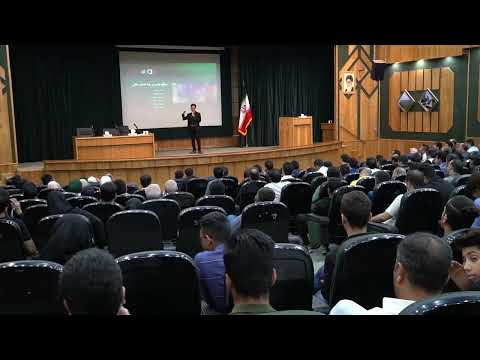
- About this talk
Full lesson video
Assess the trading level against resources and activity type
In this session, Mostafa Nezamparvar introduces five levels of trading: domestic trade, imports, exports, buying and selling between countries, and finally a model combining sourcing, processing and sales across several countries.
This is the educator's own comparative teaching framework, not an official ranking or a universal legal definition.
The comparison helps people understand the resources their intended activity needs. Buying and selling markets, communication language, payment methods, capital, transport and process complexity differ by model. Expanding geographical reach without meeting the activity's requirements is not, by itself, a growth plan.
At the start, the educator explains that an earlier course focused mainly on the first three models, while this session extends to the next two. He attributes the classification to the different resources and constraints facing an Iranian participant.
Context therefore matters: the framework explains possible routes to that lesson's audience, rather than restricting the general definition of trade.
Interest and readiness should be distinguished in every model. Someone may want multi-country operations without yet having the resources, structure or knowledge. In that situation, the educator discusses a narrower start and gradual expansion.
Conversely, less experience alone does not, in his framework, compel someone to start at the lowest level; the activity's actual requirements should be examined.
Five models in this session's teaching framework
1. Domestic trade
Buying and selling domestically
2. Imports
Buying abroad; selling domestically
3. Exports
Buying domestically; selling abroad
4. Multi-country sourcing
Buying in one country and selling in another
5. Sourcing, processing and selling
Work stages are coordinated across several locations and markets
Understand the trader's role through the services provided
Before introducing the levels, the session examines traders' roles relative to manufacturers. The educator explains that traders can provide market connections, product introductions, sourcing coordination and sales development—services not necessarily covered in every factory's everyday work.
The trading business's own identity and credibility matter in this approach. Customers should understand which organisation supplies their order and what responsibilities it has. Simply introducing someone else's goods is not the same model the educator envisages for a sustainable trading business.
This section presents the educator's view of the value of trade services. It does not create a legal definition of brokerage or dismiss all intermediaries. The practical point is to identify the service and value the business adds to buying and selling.
The discussion of large corporate structures also separates production from trading and brand presentation. They may operate within one group but have different subjects and responsibilities.
This distinction matters for newcomers: lacking a factory does not eliminate a commercial role; conversely, possessing a product does not itself mean having a sales method or market relationships.
What factors change the level of complexity?
The session introduces several comparison factors: language and terminology, payment transfers, operating infrastructure, capital and cash flow, processes and transport. Consider them together. Someone may know the product well but still be unprepared to answer overseas customers or coordinate documents and shipping.
Infrastructure is more than a workplace. Each model needs ways to communicate, present goods, coordinate orders and fulfil commitments. At the multi-country level, the costs and management of a more complex trading structure also enter the plan.
For example, a local truck name may suffice for two domestic parties but fail to communicate its specifications internationally. Information should therefore create a shared understanding. This is not merely translating a few words; it clarifies the order's practical requirements.
On payments, the educator cites domestic parties' familiarity with currency units and methods. Changing the trading partner and payment structure adds complexity.
The article derives no money-transfer method or guaranteed banking access from this comparison; it explains only differences in infrastructure needs.
What criteria should be used to compare the routes?
Contact
Language, terminology and customer knowledge
Resources and money
Capital, cash flow and payment infrastructure
Execution
Supply, transport and process complexity
Personal capabilities
Experience, interests and actual resources
Level one: buying and selling domestically
In the first model, sourcing and selling occur domestically. Language and greater familiarity with purchasing habits, payments and terminology simplify some tasks for domestic participants. The educator sees this environment as an opportunity to learn customer communication and order processes.
Relative simplicity does not mean an absence of problems or guaranteed sales. Product knowledge, responsiveness and delivery capability remain necessary. Definite income figures and timelines in the talk are not converted into promises here.
The educator also sees domestic trade as facilitating sales: a lesser-known manufacturer can reach customers through a seller's work. His personal preference is to move towards exports, but that does not mean domestic activity is worthless or without prospects for everyone.
Describing learning in the domestic market, the educator points to customer questions and calls: in practice, a person becomes familiar with purchasing language, required specifications and suitable responses. Correspondence and negotiation are therefore not just sales tools; they can expose gaps in the seller's knowledge.
He contrasts trading activity with a model dependent on a shop and walk-in customers. His point is to extend customer relationships beyond one location.
The comparison does not mean the activity is cost-free or definitively superior to every other occupation. Each business must assess its actual costs and implementation.
The educator concludes this section by recognising the value of domestic activity in making lesser-known manufacturers visible and facilitating transactions. His emphasis on exports should therefore not be interpreted as denying domestic trade's role. Recommending market expansion is separate from recognising the value of current work.
Level two: importing and selling in the domestic destination market
In the import model, sources are sought abroad and the initial sales plan focuses on the domestic market. Despite his personal preference for exports, the educator also treats imports of production equipment or materials as part of economic activity. Refrigeration and storage equipment are examples in the video.
In this model, buying from a foreign supplier is only one part of the work. Arrival timing, import procedures, capital tied up until sale and domestic market conditions all matter. The educator also mentions longer capital-recovery periods and exchange-rate fluctuations.
Timing is central to the toy-buyer account. According to the educator, the buyer could not obtain the order on time through the previous route and turned to ready stock in another market.
The product may have come from another origin and incurred additional costs, but quicker access mattered for that order. The experience shows why supply analysis should extend beyond the initial purchase price.
Discussing capital and cash flow, the educator considers the interval between buying abroad, receiving goods and selling them. If funds are tied up during that interval, planning must reflect it. Exchange-rate fluctuations arise in this context too.
The article provides no universal financial formula for returns and does not generalise numerical examples or claims that every foreign purchase is easy.
Level three: exporting domestic goods to foreign markets
In the export model, goods are sourced domestically and offered to customers abroad. The main difference from domestic activity is the wider sales market. The educator emphasises products whose overseas potential has received less attention locally.
This opportunity brings practical issues: goods availability, changing supply conditions, operational restrictions, transport and payment collection can affect fulfilment. The session itself acknowledges these obstacles; exporting is not merely converting a domestic price into a foreign one.
In the educator's proposed model, orders and advance payments can help finance fulfilment. The article does not turn this into a claim that “all exports need no capital”. Payment terms, execution capabilities and actual costs must be established for the transaction.
In the educator's view, export research should extend beyond a few famous goods. He discusses products supported by domestic production or skills whose overseas sales potential is not yet clear to local participants. This invites investigation, not a ready-made list of “best-selling products”.
He also mentions real sourcing and transport problems and changing execution conditions. Alongside his clear enthusiasm for exports, this matters: a prospective customer is not the end of the work. Sellers must manage the link between sales promises and delivery capabilities.
Within this framework, advance payments also depend on customer trust. If customer funds will finance part of an order, the terms and ability to perform must be clear.
This session does not explain detailed financial management or guarantees for executing such an order; the article therefore makes no claim that it is equally feasible for every product and person.
Level four: buying in one country and selling in another
In the fourth model, traders are not confined to one country's supply. They may examine several origins and choose according to order specifications and conditions. In the session's example, different sources can meet a customer's product request.
This model offers greater sourcing flexibility. If one source cannot deliver, investigating another can be part of the trader's work. Conversely, understanding suppliers, coordinating transactions and managing relationships across markets become more complex.
For this level, the educator also discusses foreign operating structures and banking-service costs. The article retains the subject only as an infrastructure consideration, not instructions for company registration, opening accounts, transferring money or obtaining residency. Having a company abroad does not automatically remove all operating restrictions.
Compared with exporting from a single origin, the key question is whether the business can assess and coordinate several sources. Expanding purchasing scope requires operational management, not merely adding country names to a company introduction.
In the construction-project account, the educator describes a trader coordinating materials from different sources for the project market. During the talk, he corrects one material from cement to clinker.
The example concerns the coordinator's role in bringing together goods, transport and destination needs; the transaction details have not been independently verified.
Another example concerns a product available from different origins. A customer may want a specific type or origin, and the trader can investigate suitable sourcing rather than insist on one source. Knowledge of several suppliers should be combined with understanding the order specifications.
Replacing a source does not permit changing agreed specifications or origin without the customer's knowledge.
To describe this level's advantages, the educator uses very broad language about overcoming restrictions.
Here, that expression is understood as greater sourcing flexibility, not the elimination of regulations, financial restrictions or country risks. A multi-country structure must still comply with the activity's actual requirements.
Level five: separating sourcing, processing and selling locations
In the final model, the trader does more than exchange finished goods between two countries. Raw materials or goods are sourced in one place, processed or prepared elsewhere, then supplied to the consumer market. The educator assigns no specific formal name to this level, explaining it through examples.
At this level, a commercial identity can be maintained across several sourcing and production locations. Coordination of specifications and operations becomes more important, as the customer receives a product prepared in multiple places.
In the stone example, the educator separates where the goods are bought from where preparation takes place. The consumer market is a third decision. A suitable combination for one market may differ from another; each stage's location should be assessed against the whole chain's needs.
Another account describes a manufacturer expanding across several raw-material sourcing and production locations. The educator discusses retaining the brand and supplying other markets within that structure.
The person and product are not clearly identified in the talk, and the article does not use the account to claim a company's verified size, revenue or success.
The account illustrates how sourcing and production locations may be separate from the final market.
This model has more stages: sourcing raw materials or initial goods, processing, market preparation and sales. If a consistent commercial identity is intended, coordination of products and services across these stages matters too.
Merely adding a country to the route does not create new value; establish what that stage does for the product and customer.
The fifth model illustrated with stone
Sourcing
Selecting a stone source for market needs
Preparation
Cutting and related operations in a suitable location
Supply to market
Delivering the prepared product to the consumer market
To choose a starting point, list that model's requirements
The framework's conclusion is to identify the desired activity, then assess its requirements. Domestic trade centres on local customer and supplier knowledge. Imports add foreign sourcing and management of time and capital until sale. Exports add overseas buyer relationships and cross-border order execution.
Multi-country sourcing involves managing different buying and selling sources. A sourcing-and-processing model across countries adds coordination of production and preparation. These differences explain why one approach is insufficient for all people and models.
Before deciding, clarify the product, customer location, supply sources, areas requiring learning or specialist cooperation, and costs incurred before income arrives.
These questions support a realistic choice. The framework aims to clarify development routes, not promise fixed income or require everyone to reach the highest level.
What should be clear before choosing a level?
The activity
Which product and which trade service?
Parties in the chain
Where is the supplier, and what does the customer want?
The gap to readiness
Which knowledge, contacts or infrastructure are still missing?
Execution capability
What costs and coordination are needed before income?
About this talk
This article is edited and adapted from automatic Persian captions of Mostafa Nezamparvar's lesson on this page; it is neither a word-for-word transcript nor his original written text. The five-part structure and clear educational examples are retained, while promotions, unverified historical statistics and comparisons, income promises, immigration and banking claims, and examples requiring legal review are not republished. It compares operating models, not current investment, residency, banking or customs guidance.