Educational article with video
How Do Direct Shipping, Transshipment and Cross-Stuffing Differ?
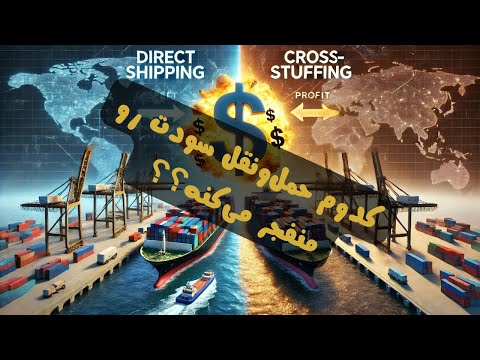
Three forms of container movement in Mostafa Nezamparvar's lesson: moving the container itself versus unloading its goods and loading them into another container.
Based on a talk by Mostafa Nezamparvar
Full article contents
- Understand a shipping method by its operations
- Direct shipping: in the session's example, the container does not change ships
- Transshipment: the container itself is transferred to another ship
- Cross-stuffing: goods move from one container to another
- Before comparing offers, establish what is being transferred
- About this talk
Full lesson video
Understand a shipping method by its operations
In this short video, Mostafa Nezamparvar explains three terms: direct shipping, transshipment and cross-stuffing. The main distinction in his examples is whether the container itself moves between ships or the goods are removed and reloaded along the route.
The educator discusses these methods in the context of changing service conditions. The article does not infer claims about the current status of routes or the legal reasons for needing a particular method. Its purpose is to clarify the operational meaning of the three terms.
Direct shipping: in the session's example, the container does not change ships
In the explanation of direct shipping, a ship carries the cargo from the origin to the destination port, and the container is not unloaded en route for transfer to another ship. The emphasis in this example is that the container does not change vessels.
Transshipment: the container itself is transferred to another ship
In the transshipment example, goods remain inside a container that arrives at an intermediate port on a ship.
Because that ship does not continue along the required route, the container is removed and placed on another ship to continue its journey.
Here, the key issue is transferring the container holding the goods, not unloading its contents into another container. Recognising this distinction helps avoid comparing two shipping offers with different operations under the generic label of “shipping”.
Cross-stuffing: goods move from one container to another
In the explanation of cross-stuffing, goods are unloaded from one container and loaded into another.
Unlike the transshipment example, this operation therefore involves unloading and reloading the container's actual contents.
The educator gives an example of this operation at an intermediate location, but the video does not provide comprehensive instruction on procedures, costs, requirements or cargo conditions. This article likewise does not turn a definition into loading instructions or a method for changing documents or the origin of goods.
The three methods at a glance
Direct
In the session's example, the container reaches its destination without transfer to another ship.
Transshipment
The container itself is transferred from the first ship to the second.
Cross-stuffing
The goods are unloaded from the first container and loaded into the second.
Before comparing offers, establish what is being transferred
A simple question clarifies the distinction: Does the container remain on the same ship to its destination, is the container itself transferred to another ship, or are the goods removed and loaded into another container?
The answer makes the structure of the route easier to understand.
At the end, the video defers discussion of where services are available and combined methods to later training. This article therefore does not specify a preferred method, suitable port, rate or transit time for any particular route. A practical choice requires examining the actual shipment and service.
About this talk
This article was edited and adapted from the automatic Persian captions of Mostafa Nezamparvar's video on this page. All three definitions and operational distinctions have been retained; details not discussed about ports, regulations or current conditions have not been added.